What Is Service Design? A Complete Guide to Creating Better Customer Experiences

VIVEK S.L · July 7, 2026
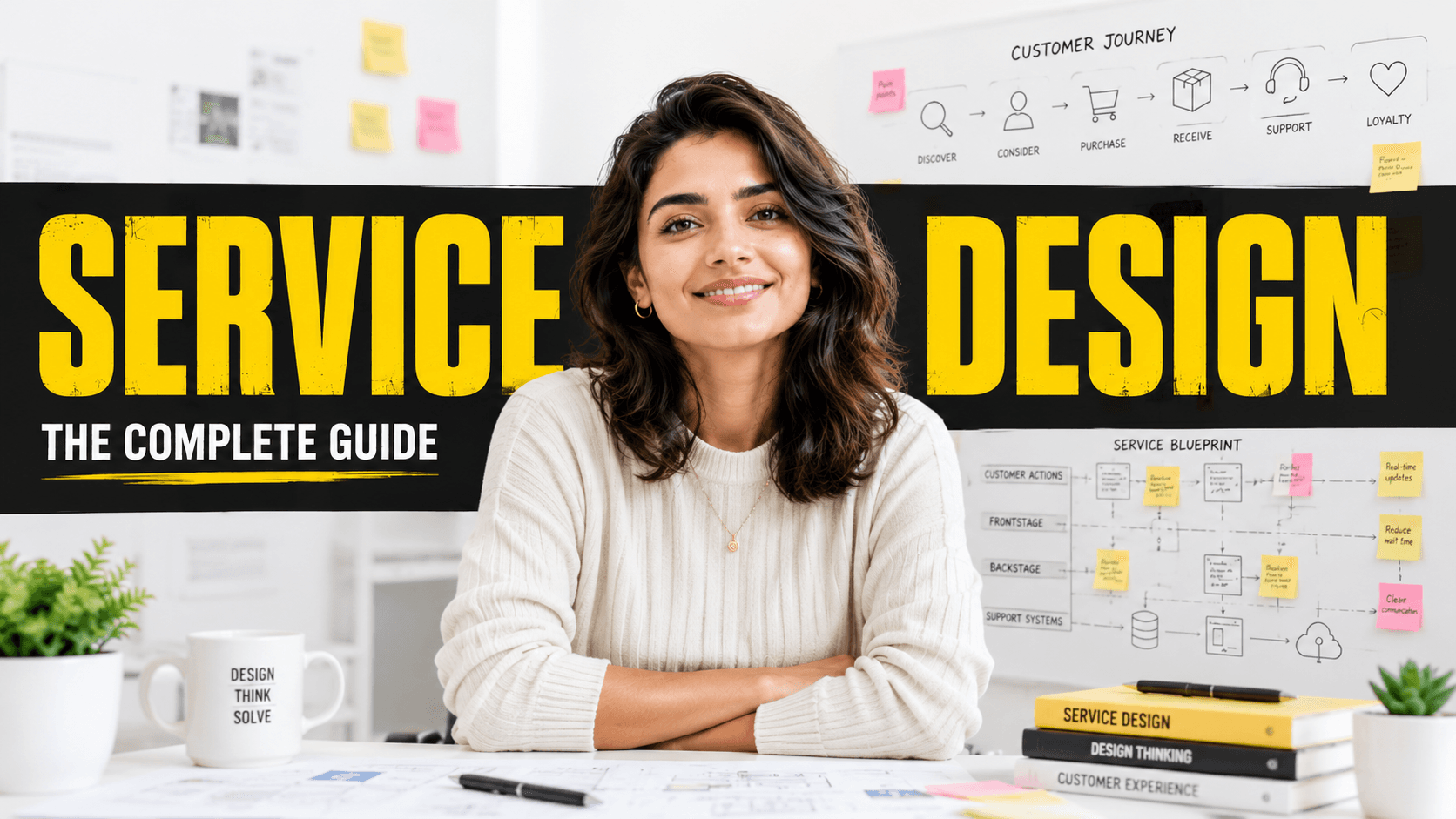
Businesses often invest heavily in creating beautiful websites and intuitive mobile applications. Yet despite polished interfaces, customers still encounter frustrating experiences—long support wait times, inconsistent communication, delayed deliveries, or disconnected services.
The problem isn’t always the product.
It’s often the service behind it.
Service Design focuses on the complete experience a customer has with an organization, ensuring that every interaction—from discovery to post-purchase support—works together as one seamless system. Rather than optimizing individual touchpoints, service design aligns people, processes, technology, and operations to create experiences that are efficient for both customers and businesses.
In this guide, we’ll explore what Service Design is, why it matters, the frameworks professionals use, and how organizations can implement it successfully.
What Is Service Design?
Service Design is the practice of designing and improving the entire service ecosystem that supports a customer experience.
Unlike User Experience (UX) Design, which typically focuses on a specific product or interface, Service Design considers everything that happens before, during, and after a customer interacts with a business.
This includes:
- Customer interactions
- Employee experiences
- Internal workflows
- Operational systems
- Technology platforms
- Physical environments
- Business processes
Its goal is simple: Create services that are useful for customers while remaining efficient for the organization delivering them.
Service Design vs UX Design
These two disciplines work together, but they solve different problems.
UX Design focuses on digital products and interfaces, improves usability, designs screens and interactions, optimizes customer touchpoints, and is product-centered.
Service Design focuses on the entire customer journey, improves the complete service, designs systems and operations, connects every touchpoint together, and is business ecosystem-centered.
Think of it this way. A food delivery app may provide a flawless ordering experience. But if the restaurant receives the order late or the delivery partner cannot find the address, the customer still has a poor experience. UX made the app easy to use. Service Design ensures the entire service actually works.
Why Service Design Matters
Modern customers rarely judge businesses by a single interaction. Instead, they evaluate the complete experience. Every disconnected process creates friction.
Organizations that embrace Service Design gain several advantages.
Reduced Customer Friction
Customers move effortlessly between digital and physical touchpoints. Whether they’re browsing online, visiting a store, or contacting support, every interaction feels connected.
Greater Operational Efficiency
Service Design identifies duplicated work, unnecessary approvals, and inefficient workflows. Optimized processes reduce operational costs while improving service quality.
Better Collaboration
Instead of departments working independently, Service Design encourages collaboration across: Product, Design, Marketing, Operations, Engineering, Customer Support, and Sales. Everyone works toward a shared customer experience.
Increased Customer Loyalty
Consistent, reliable experiences naturally build trust. Customers are more likely to return when every interaction feels predictable and effortless.
The Three Building Blocks of Service Design
Every successful service is built upon three essential components.
1. People
People include everyone involved in delivering the experience. Examples include: Customers, Employees, Customer support, Delivery partners, Business stakeholders, and Third-party vendors. Understanding everyone’s needs is fundamental to successful service design.
2. Props
Props are the tools and resources that enable a service. These include: Websites, Mobile applications, Payment systems, Documentation, Retail stores, Kiosks, and Internal software. Every prop should support the customer journey rather than create additional complexity.
3. Processes
Processes define how work gets done. Examples include: Order fulfillment, Complaint handling, Product returns, Account verification, and Employee onboarding. Well-designed processes reduce friction for both customers and employees.
The Five Principles of Service Design
Professional service designers evaluate experiences using five key principles.
User-Centered
Every decision should begin with understanding real customer needs through research rather than assumptions.
Co-Creation
Great services are created collaboratively. Designers involve customers, employees, leadership, and stakeholders throughout the design process.
Sequencing
Services consist of multiple connected moments. Each stage should naturally flow into the next.
Evidencing
Services are often invisible. Service Design makes hidden processes visible so teams can better understand and improve them.
Holistic Thinking
Instead of optimizing isolated touchpoints, Service Design considers the complete ecosystem. Every interaction influences the overall experience.
Essential Service Design Tools
Service designers rely on visual frameworks to simplify complex systems.
Customer Journey Map
Illustrates the customer’s actions, emotions, expectations, and pain points across the entire journey. It answers: What is the customer experiencing?
Service Blueprint
Builds upon the customer journey map by adding: Frontstage interactions, Backstage operations, Employee responsibilities, Supporting technologies, and Internal processes. It answers: What happens behind the scenes to deliver this experience?
Ecosystem Maps
Show relationships between customers, partners, technologies, and business departments.
Personas
Represent different customer groups and their goals, motivations, and behaviors.
Opportunity Roadmaps
Prioritize improvements based on customer impact, business value, and implementation effort.
How to Implement Service Design
Organizations don’t need to redesign everything at once. Start small.
Step 1: Identify a High-Impact Journey
Choose one customer experience that creates the greatest frustration. Examples: Account creation, Product returns, Customer support, Online checkout.
Step 2: Map the Current Experience
Document every customer interaction and every internal process supporting it. Be honest. Don’t map the ideal journey. Map reality.
Step 3: Find Friction
Look for: Delays, Repeated manual work, Department handoffs, Communication gaps, and Customer complaints. These reveal opportunities for improvement.
Step 4: Prototype Improvements
Rather than redesigning everything, test small changes. Examples: Simplify approval processes, Improve internal communication, Automate repetitive tasks, Clarify customer messaging.
Step 5: Measure Results
Track both customer and operational metrics.
Customer metrics: Customer Satisfaction (CSAT), Net Promoter Score (NPS), Customer Effort Score (CES).
Operational metrics: Support response time, Handoff delays, Resolution time, Employee productivity.
Continuous measurement leads to continuous improvement.
Real-World Examples
Royal Enfield
Rather than treating the website and dealership as separate experiences, Royal Enfield created a connected purchasing journey. Customers could configure motorcycles online, explore accessories, and continue their experience seamlessly at physical dealerships.
PVR Cinemas
Instead of separating ticket booking, food ordering, and loyalty programs, PVR integrated these services into one connected mobile experience. This improved convenience while increasing concession sales.
RBL Bank
RBL redesigned fragmented credit card onboarding into one standardized customer journey. Unified communication, streamlined verification, and premium onboarding materials created a more consistent brand experience.
Measuring Success
Successful Service Design balances customer satisfaction with operational performance.
Key metrics include: Customer Satisfaction (CSAT), Net Promoter Score (NPS), Customer Effort Score (CES), Customer Retention, Churn Rate, Average Resolution Time, Support Escalation Rate, Operational Efficiency, and Employee Satisfaction.
The goal isn’t simply happier customers. It’s creating systems that consistently deliver better experiences.
Final Thoughts
Service Design reminds us that great experiences don’t happen by accident.
Behind every smooth customer interaction lies a carefully designed system of people, processes, tools, and operations working together.
While UX Design improves individual touchpoints, Service Design ensures the entire journey—from the first interaction to long-term loyalty—feels connected, reliable, and effortless.
Organizations that invest in Service Design move beyond fixing isolated problems. They build resilient systems that improve customer satisfaction, empower employees, and create sustainable business growth.
As customer expectations continue to rise, businesses that design their services—not just their products—will be the ones that stand out.